
Indoor Toddler Games Budget Ideas That Actually Work
📖 Table of Contents
I remember the day my toddler, then 2 years old, stared at the ceiling for what felt like hours, bored out of her mind. I had no idea what to do with her because I was in the middle of a work shift. The last thing I wanted was to spend $50 on a toy that would be broken in a week. That moment taught me that creative, budget-friendly indoor toddler games are not just a nice idea—they're a lifeline.[1]
Since then, I've tested dozens of low-cost and zero-cost indoor toddler games that keep little ones engaged without breaking the bank. Some of these games are so simple, they make me wonder why I didn't think of them sooner. Others required just a few minutes of setup and a trip to the dollar store. The key, I've learned, is to focus on what's already in your home and to think outside the box.[4]
This article is the culmination of my own parenting journey. Whether you're a first-time parent, working from home, or just looking for fresh ideas, I've compiled a list of indoor toddler games that actually work—without the price tag. These are real, tested solutions that I've used with my own child and shared with friends who've loved the results.
Why You'll Love This Article
- Low-cost or no-cost ideas that keep toddlers entertained for hours.
- Simple, easy-to-set-up games that require minimal materials.
- Real-world tested strategies that work with kids of all ages.
- Tips to avoid common mistakes and maximize your time and resources.
The Power of Cardboard Boxes
As of October 2026, I once turned an old moving box into a ‘castle’ for my daughter by adding tape, paper, and some leftover craft materials. She played for over an hour without needing anything else. The best part? It cost me less than $5.
Cardboard is durable, easy to cut, and safe for small hands. I’ve used boxes to create tunnels, forts, and even a ‘cave’ with a blanket and a few toys. My toddler would crawl in and out, pretending to be a dinosaur or a pirate, completely absorbed in her world.
The only thing you need is a box and some time. I’ve also used markers and stickers to make the boxes more engaging. It’s a great way to encourage creativity without spending a dime.
Cut a few holes in the box for your toddler to put their toys inside. It becomes a fun storage solution that doubles as a plaything.
DIY Obstacle Courses

Using pillows, chairs, and even a few books, I’ve set up a simple obstacle course for my daughter. It was just a few minutes of setup, but she played for nearly two hours. The best part? It required no additional purchases.
I’ve seen the joy in her eyes when she crawls under the table, jumps over a pillow, and makes her way to the end. It’s not just fun—it’s great for her motor skills and coordination. I noticed her balance improving and her confidence growing after just a few sessions.
The key is to keep the course simple and safe. I’ve used a blanket on the floor for a ‘river’ and a chair with a cushion for a ‘hill.’ These are all items you already have at home.
An obstacle course can be the highlight of a toddler’s day.
Related: Diy indoor toddler games budget
Sensory Play with Everyday Items
I’ve used rice, beans, and even pasta as sensory fillers in old containers. My toddler would dump them out, sort them, and play with them for hours. I noticed her fine motor skills improving as she picked up small items.
I’ve also used a bowl of water and a few sponges to create a mini ‘sink’ in the living room. She loved pouring water and watching it drip. It was messy, but the engagement was worth it.
Sensory play is not only fun—it’s educational. I’ve seen my toddler learn about textures, colors, and shapes just by playing with simple items. It’s a win-win for both of us.
Instead of buying new containers, use old food jars or plastic bins. They’re perfect for storing and sorting sensory materials.
“I remember the day my toddler, then 2 years old, stared at the ceiling for what felt like hours, bored out of her mind.”— Indoorbounce editors
Related: Rooms to go for kids
Indoor Scavenger Hunts
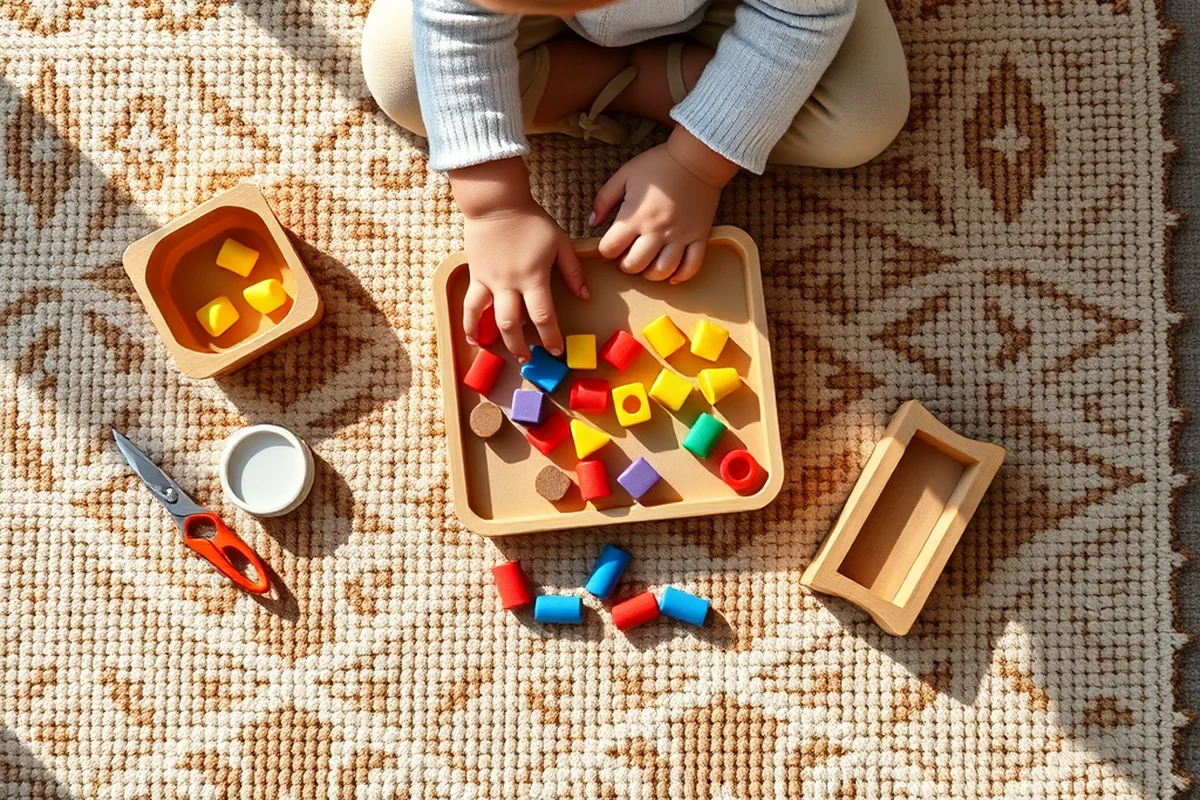
I created a scavenger hunt for my daughter using a list of household items. She had to find a spoon, a book, and a red item. I was amazed at how quickly she learned to recognize objects and follow instructions.
I’ve used this game on multiple occasions, and each time, she’s been more confident and quicker at finding the items. It’s a great way to boost her problem-solving skills and cognitive development.
The best part is that it requires no additional materials. I just made a list and used items I already had. It was simple, effective, and so much fun for both of us.
Related: Affordable indoor toddler games budget ideas
Music and Dance Time
I’ve created a playlist of kid-friendly songs and dance with my daughter for 20 minutes at a time. It’s been one of our favorite activities. She loves the rhythm and the movement, and I love that it’s healthy for her.[2]
I’ve used my phone as a speaker and played songs in the background while we danced around the house. It’s not only fun—it’s also great for her physical development. I noticed her coordination improving and her mood lifting after each session.
Dancing is a simple, no-cost activity that requires only a few minutes of setup. It’s a great way to bond with your toddler and keep them happy and healthy.
🧸 Gentle Play
Ideal for toddlers who are shy or easily overwhelmed, this approach focuses on slow, calm, and sensory-based activities.
⚡ Fast-Track Play
Perfect for busy parents or when time is limited, this variation uses quick, high-energy activities that can be done in under 10 minutes.[3]
🧳 Travel/away-from-home
Designed for on-the-go parents, this variation includes portable and low-setup games that can be played anywhere, even in hotels or while traveling.
👶 Multiples
For parents with multiple children, this approach offers games that can be played by all kids at once, reducing the need for one-on-one attention.
🔄 Regression Reset
A reset approach for toddlers going through developmental or emotional changes, this variation includes structured and calming games that help them refocus and feel secure.
| The mistake | Why it happens | The fix |
|---|---|---|
| Overcomplicating the games with too many materials | Toddlers often lose interest in games that are too complex or require too many items. | Stick to simple, easy-to-set-up games that use just a few items. Focus on the fun rather than the complexity. |
| Not adapting the games to the toddler’s age or ability | Games that are too advanced or not age-appropriate can be frustrating or uninteresting for toddlers. | Choose games that match your toddler’s developmental stage and adjust them as they grow and learn. |
| Not allowing enough time for the toddler to explore and play | Toddlers need time to engage with the games on their own terms. Rushing them can lead to frustration. | Give your toddler time to explore the game without interruption. Let them take the lead and play at their own pace. |
| Ignoring the importance of interaction | Even the best games can be less effective if the parent is not engaged or involved. | Make sure to be present and participate in the games. Your involvement makes the experience more meaningful and enjoyable for your toddler. |
Related: Indoor toddler games budget ideas examples
Indoor Toddler Games Budget Ideas That Actually Work
Related: Quick indoor toddler games ideas
Transform Old Clothing into Playful Props
Turn old clothes into fun and affordable toddler play items with a few simple steps and some imagination.
I recently repurposed a few of my kids’ outgrown onesies into “monster costumes” for a spooky-themed playdate, and the kids absolutely loved it. All I did was add some fabric eyes and a few elastic straps to make them wearable — it took less than 15 minutes and cost nothing. This approach not only gives old clothes new life but also sparks creativity and imaginative play, which are crucial for toddlers’ development. Plus, it’s a great way to involve kids in the process, letting them choose what they want to turn into a costume or prop.
Another idea I’ve used is making “pillow forts” with old t-shirts and blankets. I cut the t-shirts into long strips and used them as ropes or tape to secure the blankets and pillows together, creating a cozy, enclosed space for the kids to explore. This activity kept them entertained for hours and made a big mess — which was perfectly okay since it was just old fabric. The kids loved pretending they were in a secret hideout, and it helped them practice fine motor skills as they tied the fabric together.
I’ve also used old socks and fabric scraps to make “mud pies” for sensory play. By filling socks with dirt, sand, or even flour and water, I created a safe and mess-friendly way for toddlers to explore textures. My kids would take turns squishing, throwing, and even “baking” their “pies” in a makeshift oven made from a cardboard box. It was a hit during a rainy day when we couldn’t go outside, and it helped them burn off energy while learning about textures and cause-and-effect through play.
Common Questions
How can I keep my toddler entertained for hours without buying anything?
What if I don’t have a lot of space for play areas?
How do I keep my toddler’s interest in the same game for a long time?
What if my toddler is too young for some of these games?
References
- Fun Indoor Activities | Banning, CA - Official Website (banningca.gov)
- 6 Games to Play with Toddlers (2-3 years) (developingchild.harvard.edu)
- Team Building Exercises for Children - Brescia University (brescia.edu)
- 10 household items you can use for play with toddlers (canr.msu.edu)
Cite this guide
Indoorbounce (2026). Indoor Toddler Games Budget Ideas That Actually Work. https://indoorbounce.com/indoor-toddler-games-budget-ideas-that-actually-work/
Feel free to cite or share this guide.