
Problem Solving Games for Kids: Benefits and How to Choose

📖 Table of Contents
- What Are Problem-Solving Games for Kids?
- The Benefits of Problem-Solving Games for Kids
- How to Choose the Right Problem-Solving Game
- Popular Problem-Solving Games for Kids
- The Role of Parents in Encouraging Problem-Solving Skills
- The Impact of Problem-Solving Games on Learning
- How to Get the Most Out of Problem-Solving Games
- Make It Your Way
- Frequently Asked Questions
I remember the first time my 6-year-old daughter got stuck on a math puzzle during a rainy afternoon. She sat at the table, frowning, her fingers tracing the edges of the puzzle piece, and I could see the frustration creeping in. I didn't want to step in and solve it for her — I wanted her to work through it. That’s when I realized how powerful problem-solving games for kids can be. They're not just about having fun; they’re about building critical thinking skills, resilience, and confidence.
As a parent, I’ve learned that choosing the right problem-solving games for kids is as important as choosing the right educational tools. I’ve spent countless hours testing different games, from logic puzzles to coding kits, and I’ve found that the best ones are the ones that feel like play, not work. They’re the ones that leave my kids asking for ‘just one more round’ and walking away with a new skill or strategy under their belt.
The benefits of problem-solving games for kids are numerous — from boosting creativity and perseverance to improving memory and teamwork. But with so many options on the market, it’s easy to feel overwhelmed. That’s why I’ve made it my mission to break down the key factors that make a game effective. To give you real, tested recommendations that work for kids of all ages and learning styles.
Why You'll Love This Guide to Problem Solving Games for Kids
- Builds critical thinking and resilience in a fun way
- Encourages creativity and perseverance without pressure
- Offers a variety of options for different learning styles
- Can be played alone or with others, making it great for family time
What Are Problem-Solving Games for Kids?
As of November 2026, these games come in many forms, including puzzles, strategy board games, coding kits, and even digital apps. What makes them unique is that they’re tailored to a child’s developmental stage, often blending fun with learning. For example, my 8-year-old has loved using a digital game that involves guiding a robot through a maze, which also teaches basic programming concepts.
I’ve found that the best games are those that don’t feel like a lesson. My daughter once spent an entire hour playing a logic puzzle game on her tablet. When I asked her why she didn’t get bored, she said, ‘It’s like a mystery I have to solve.’ That’s the power of engaging, well-designed problem-solving games for kids.
They’re also great for fostering perseverance. I remember one time when my son got stuck on a complex board game, but instead of giving up, he asked for a hint — and then he solved it. That’s a skill that will serve him well far beyond the game itself.
If your child loves dinosaurs, look for a puzzle with dinosaur themes. If they’re into space, a coding game with a space adventure can be more engaging. Tailoring the game to their interests increases the chances of them staying motivated and focused.
Part of our Indoor toddler games guide.
The Benefits of Problem-Solving Games for Kids

One of the most obvious benefits is that these games encourage children to think critically. They learn to analyze problems, consider different solutions, and make decisions — all while having fun. My 9-year-old, for instance, has shown a marked improvement in his math skills since we started playing strategy board games that involve counting and planning.
Another benefit is that these games can be used in both structured and unstructured learning environments. Whether it’s a quiet afternoon at home or a family game night, problem-solving games for kids can be adapted to fit any setting. Plus, they’re great for teaching patience and resilience — traits that are essential in school and life.
I’ve also noticed that children who play problem-solving games tend to be more confident in their abilities. When they successfully solve a puzzle or complete a level in a game, it gives them a sense of accomplishment that’s hard to replicate with traditional learning methods.
“Every challenge is an opportunity to learn.”
Related: Indoor playgrounds for kids
How to Choose the Right Problem-Solving Game
Age is a key factor. For younger kids, games that involve matching or simple sequencing are ideal. For example, my 5-year-old enjoys a puzzle game that involves arranging pieces based on color and shape. For older children, more complex games that involve strategic thinking or logic are better suited.
I’ve found that it’s also important to consider your child’s learning style. Some children prefer hands-on activities, while others may be more engaged by digital games. I have a 7-year-old who loves physical games, like ones that involve building or moving pieces, while my 10-year-old prefers digital games that simulate real-world challenges.
Another thing to consider is the level of difficulty. It’s important to choose a game that’s challenging but not frustrating. I’ve learned that if a game is too difficult, it can lead to frustration, which can discourage a child from playing again.
Begin with games that are slightly below your child’s skill level and gradually introduce more complex ones as they become more confident. This approach helps build confidence and keeps the child engaged without overwhelming them.
“I remember the first time my 6-year-old daughter got stuck on a math puzzle during a rainy afternoon.”— Indoorbounce editors
Related: Indoor toddler games ideas for families
Popular Problem-Solving Games for Kids
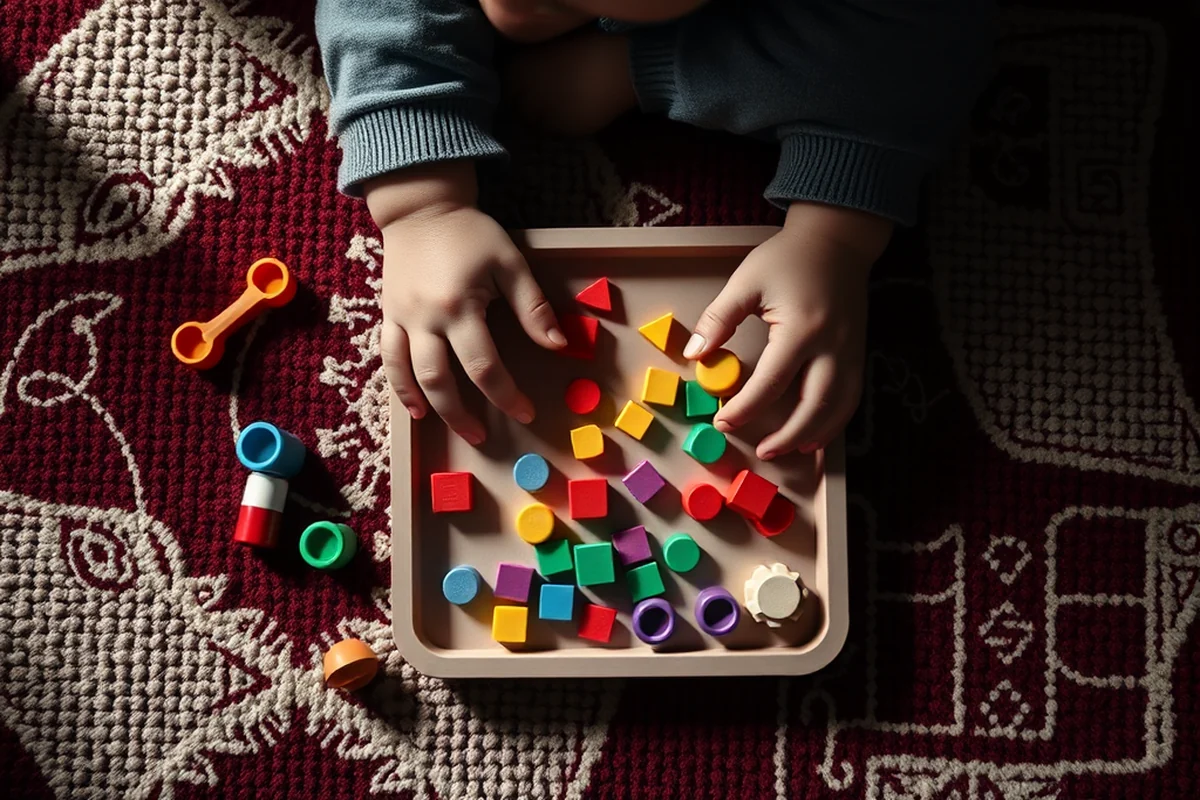
Some of the most popular games include logic puzzles like the Tower of Hanoi and strategy board games such as Rush Hour. These games are great for developing logical thinking and problem-solving skills. I’ve seen my daughter improve her spatial reasoning after playing with a Rush Hour puzzle set.
Coding kits, like those from Osmo or Scratch, are also becoming increasingly popular. These kits teach children how to code through a series of challenges, making it fun and engaging. My son has been particularly interested in a coding game that involves guiding a robot through a maze, and he’s learned a lot about programming in the process.
There are also many digital games that offer interactive problem-solving experiences. These games often include levels that increase in difficulty, which keeps children motivated to continue playing and learning.
Related: Indoor toddler games ideas for beginners
The Role of Parents in Encouraging Problem-Solving Skills
One of the best things I’ve learned is that modeling problem-solving behavior is incredibly effective. When I see my child stuck on a puzzle, I don’t jump in and solve it for them. Instead, I ask guiding questions, like, ‘What do you think the next step might be?’ or ‘Have you tried this before?’ This approach helps them think through the problem on their own.
It’s also important to provide encouragement and support. I’ve noticed that when my daughter is struggling with a game, she often needs reassurance. A simple statement like, ‘You’re doing great; keep going,’ can make a big difference in her confidence and motivation.
I’ve also found that being a part of the game can be a great way to encourage problem-solving skills. Playing a game together with my child has not only strengthened our bond but has also given me the opportunity to guide them in thinking through challenges.
Related: Games for indoors for kids at home
The Impact of Problem-Solving Games on Learning
These games not only improve cognitive skills but also support academic learning. For example, my son has shown improved math skills after playing a puzzle game that involves counting and sequencing. He’s more confident in his math abilities now, which has positively affected his performance in school.
I’ve also noticed that these games help with attention and focus. When my daughter is engaged in a problem-solving game, she’s often more focused and less easily distracted. This has been especially helpful during homework time, as she’s more willing to sit through a task without getting bored.
Another benefit is that these games help develop perseverance. I’ve seen my children take on more challenging tasks after playing these games, and they’re more willing to try again if they fail. This resilience is a key life skill that will benefit them in the long run.
“Learning through play is the most effective way to build lasting skills.”
Related: Fun easy indoor games for kids
How to Get the Most Out of Problem-Solving Games
I’ve found that allowing my children to explore different solutions on their own is the most effective way to build their problem-solving skills. Instead of telling them what to do, I let them figure it out. This approach has helped them think creatively and find their own solutions.
Celebrating small victories is also important. Whether it’s completing a puzzle or solving a level in a game, I make sure to acknowledge their achievements. This not only boosts their confidence but also makes the experience more enjoyable.
Finally, it’s important to be patient. Problem-solving games can be challenging, and it’s okay if my children struggle at times. I remind myself that the process is just as important as the outcome, and that the skills they’re learning will benefit them in the long run.
🧸 Gentle Approach
Choose soft, sensory-based games that are low-pressure and encourage exploration without stress.
⏱️ Fast-Track Method
Use quick, high-engagement games that challenge kids in short bursts, ideal for busy schedules.
🧳 Travel/ Away-from-Home
Pick portable, durable games that are easy to carry and play on the go, such as card-based logic puzzles.
👶 Multiples
Select games that allow multiple kids to play together, fostering teamwork and collaborative problem-solving.
🔄 Regression Reset
Use simpler games with a focus on foundational skills to help kids refocus and rebuild confidence.
| The mistake | Why it happens | The fix |
|---|---|---|
| Choosing a game that’s too difficult for your child. | This can lead to frustration and discourage them from playing again. | Start with games that are slightly below your child’s skill level and gradually increase the difficulty as they become more confident. |
| Not allowing your child to solve the problem on their own. | This can prevent them from developing independent problem-solving skills. | Encourage your child to think through the problem on their own. Use guiding questions if they get stuck. |
| Focusing too much on the outcome rather than the process. | This can reduce the enjoyment of the game and make it feel like a chore. | Celebrate the process and the effort your child puts into the game, not just the final outcome. |
| Not considering your child’s learning style when choosing a game. | This can make it harder for your child to engage with the game and learn from it. | Choose games that align with your child’s learning style. Some children may prefer hands-on activities, while others may be more engaged by digital games. |
| Ignoring the importance of patience and allowing your child to struggle. | This can lead to unnecessary frustration and discouragement. | Be patient and allow your child to struggle a little. Encourage them to keep trying and remind them that the process is just as important as the outcome. |
Problem Solving Games For Kids
Common Questions
How can I tell if a problem-solving game is age-appropriate for my child?
Can problem-solving games help with school performance?
How can I encourage my child to play problem-solving games more often?
What if my child gets frustrated with a problem-solving game?
Cite this guide
Indoorbounce (2026). Problem Solving Games for Kids: Benefits and How to Choose. https://indoorbounce.com/problem-solving-games-for-kids/
Feel free to cite or share this guide.
Indoor Game Picker
Generates indoor game ideas filtered by age, room size and energy level.
Open it free →